





Delivering IT solutions to business problems
How can your team utilise IT solutions for your company's business problems? Discover here.
 Close
Close
No longer tasked with automating back-office functions to reduce headcount, today’s CIO needs to use cutting-edge technology to drive innovation and competitiveness.
Building strong support
Organisations need robust, cost-efficient and secure IT solutions and systems, but today’s CIO should have a right-hand man or woman – usually the IT manager or IT director – who takes care of such matters. This means recruiting the right person for the job, mentoring them and building a strong, trusting relationship. To achieve this, the CIO needs a variety of soft skills, such as emotional intelligence, empathy, good judgement and the ability to get out of someone’s way and let them do their job.
Driving innovation within the business
The CIO has to challenge the executive team’s expectations and encourage them, and the rest of the organisation, to see the IT department as a technology consultancy focused on innovation within the business. The CIO and his team can provide an informed, business-focused view of how IT solutions can be used to better support existing functions, and leverage emerging technologies to change the way they do business.
Pioneering change management
While innovation should be encouraged, not everyone embraces change immediately, so the CIO needs to be a change leader. Again, being an effective instigator and leader of change management doesn’t require hard-core technology skills. It requires emotional intelligence, the ability to identify and nurture ‘change champions’ at various levels and consistent communication across the business.
Balancing needs
The CIO also needs to be flexible enough to fit in with the shifting needs and demands of the business, and to accept that good ideas can come from anywhere. CIOs need to balance business needs against the tidal flow of opportunity – and risks – offered by innovative ideas and new disruptive technologies. Instead of getting involved in the nuts and bolts of software design and installation, CIOs are now analysing competing cloud services for data security, availability and responsiveness.
Bridging the gap
Not only does today’s CIO need to have an intimate knowledge of the business and its technology, but they also need to bridge the gap between the two and identify how IT solutions can be used to drive innovation and increase sales, rather than just boost productivity

Is it time to move your printing and document workflows to the cloud?

In this increasingly digital world, you have a world of tools at your fingertips to make better printing decisions, helping you financially, reducing waste and streamlining your processes.

What do small, nimble companies have over huge, legacy systems based organisations? We lay out the advantages to being small.

Whether you’re leading a law firm or an alternative legal practice (ALT), blockchain is set to revolutionise the way you do business. You will soon be using it yourself or guiding your clients as they get to grips with it.

A handy list of dos and don’ts for you to use in your daily interactions

Australian business leaders see the value in innovation but more needs to be done if we’re to arrest the slide in our national competitiveness.

With cyber crime on the rise in Australia, it’s becoming more important than ever to protect your business with cyber security training. We look at how your employees are your best weapon against cyber attacks.

If you're on the Internet, you face security risks. You can no longer afford to assume that your business won't be a target because you're not big enough. Here are some big business takeaways that can substantially benefit your business' security.

Discover the IT trends seen now and into 2017 across all digital and technology platforms and solutions

As web forms and e-signatures transform information management, the future is brightest for businesses that plan how they collect, store and analyse data.
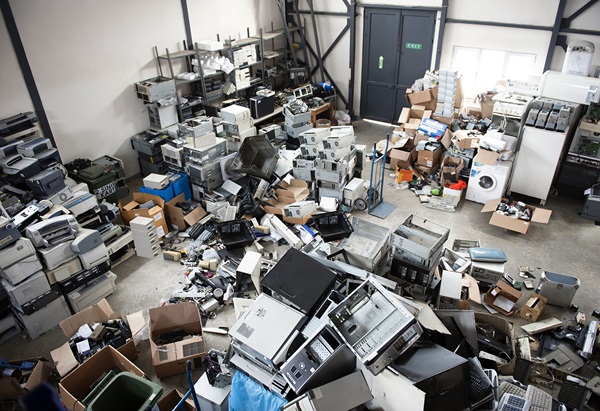
E-waste is one of the fastest growing components of the waste stream. Discover why your company needs to consider enforcing take-back or recycling policies.